

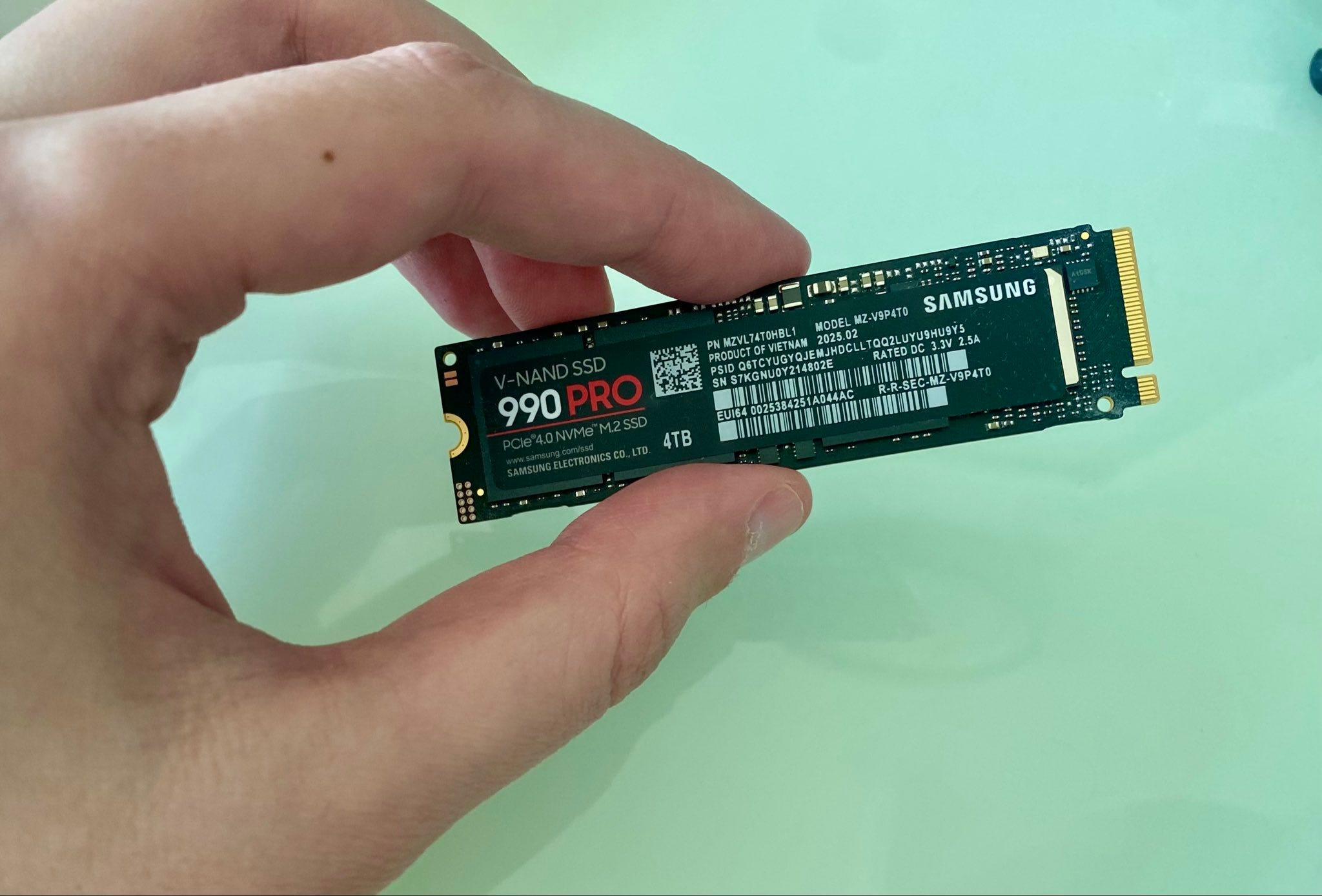
About a year ago, I started to really feel the pain in that a 500 GB SSD was apparently no longer large enough for a gaming PC. So I replaced my old drive with a 4 TB one:
I did not want to deal with copying my drive over with dd (a.k.a. the data destroyer) or any of the random third-party software with which you’re expected to port Windows to a new drive. Or with Windows license keys. Or with Windows.
Lately, I’m not the only one. The negative sentiment against Windows (and other Microsoft software) has reached a cultural breaking point: the most memorable quote from the Artemis II flight (to the moon!) was “I have two versions of outlook and neither are working.”
But simply annoying your users isn’t enough. Companies often conclude that their user annoyance is worth the tradeoff, because they don’t immediately see any real effects on user engagement or churn. This works so long as the company’s moat remains intact: without the presence of a viable alternative, you can pretty much perpetually mask dissatisfaction—that is, until the dam breaks.
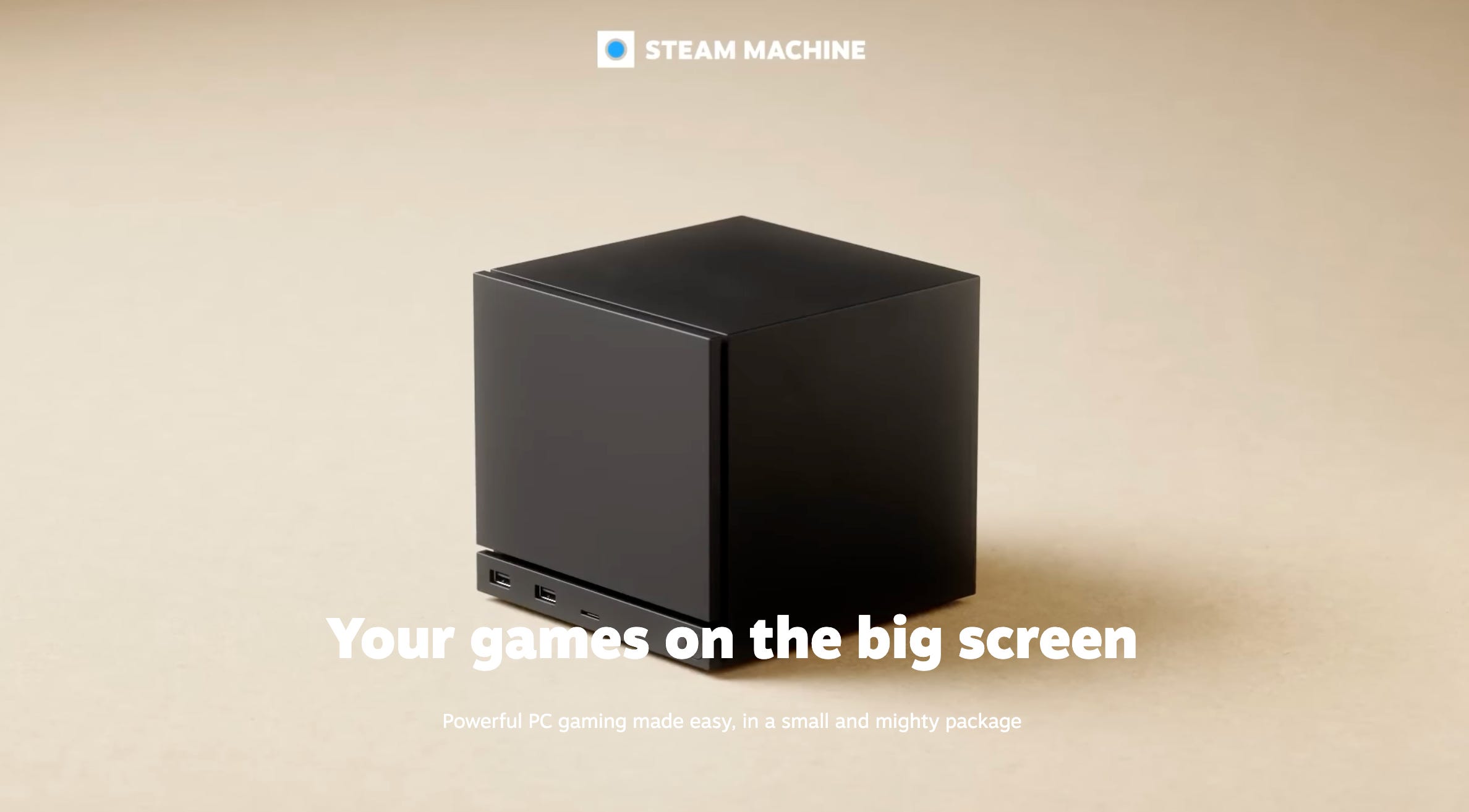
Enter SteamOS. It’s entirely possible—thanks to the efforts of Valve (the creators of Steam, and more importantly, the version of Linux they created for their Steam Deck)—that Microsoft may lose its positioning.
They’re a big reason why many of my favorite games have native Linux builds, that many say run better than on Windows. But even more wildly, Steam’s version of WINE compatibility layer, Proton, actually works.
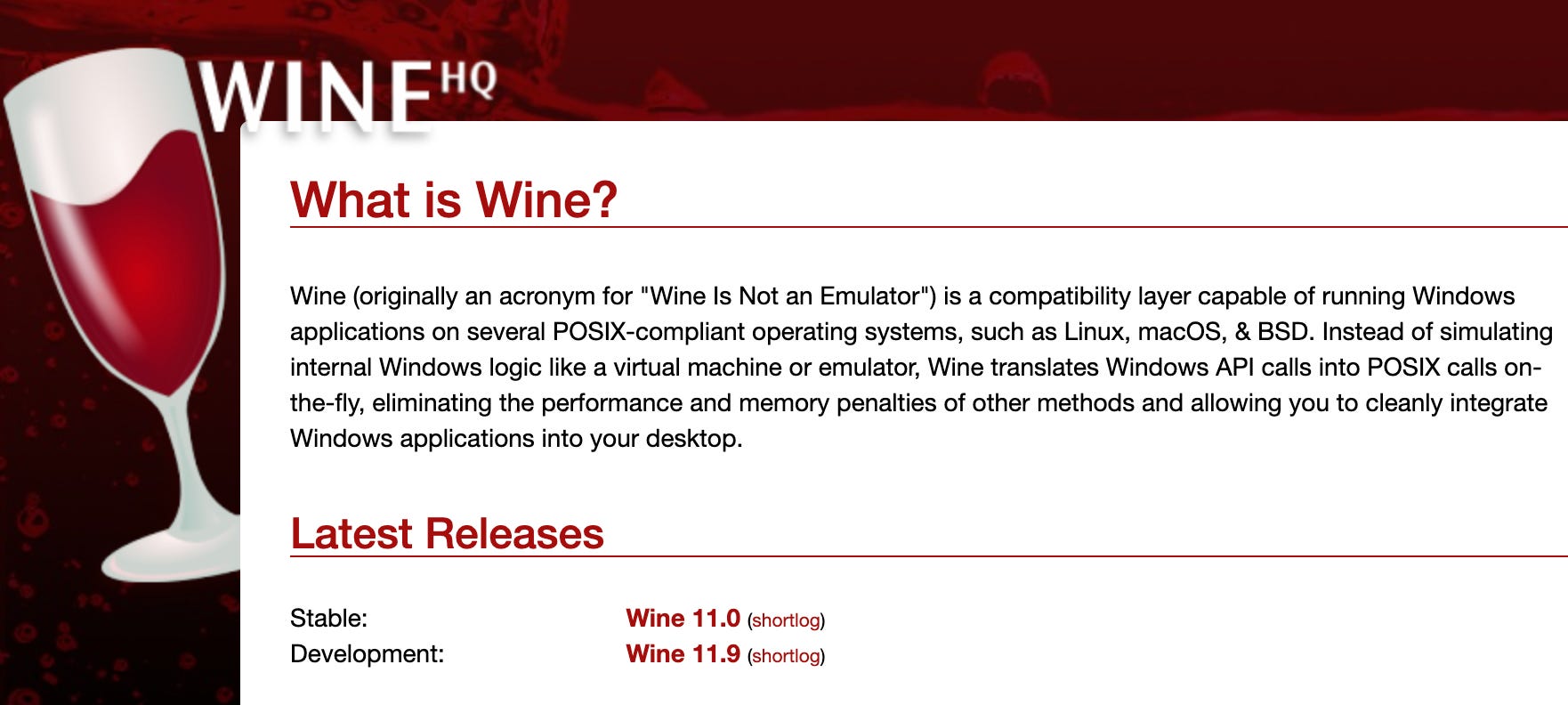
My gaming machine began its new life as a Linux Mint machine thanks to Proton. This allows me to run even Windows builds, even for graphically intensive games like Cyberpunk 2077—the type most historically dependent on Windows scaffolding. There goes Microsoft’s moat.
At least a big chunk of it. This win will need to generalize to more diverse types of software. This is a lot more viable than it might initially seem—in fact, it’s the biggest success story of the decade: the chips NVIDIA developed for gaming ended up as the backbone of AI.
I had originally played Cyberpunk 2077 on the Switch 2—the main reason I brought Cyberpunk 2077 to Steam was to try to mod it. But it wasn’t just the game itself I needed to run—I would also need it mod utility WolvenKit, a non-Steam Windows program. It was WolvenKit that clued me into my most recent experiment.
You see, there was one more Windows program I found myself rebooting for (on the occasion I’m not simply being a degenerate gamer): Ableton Live—a digital audio workstation meant for music production.
I decided to try running Ableton the same way I ran WolvenKit—quote via the Linux instructions:
Now here's where it gets weird, open Steam and go to your library. Find the "Games" tab on the menu bar, and click on "Add a Non-Steam Game to My Library"
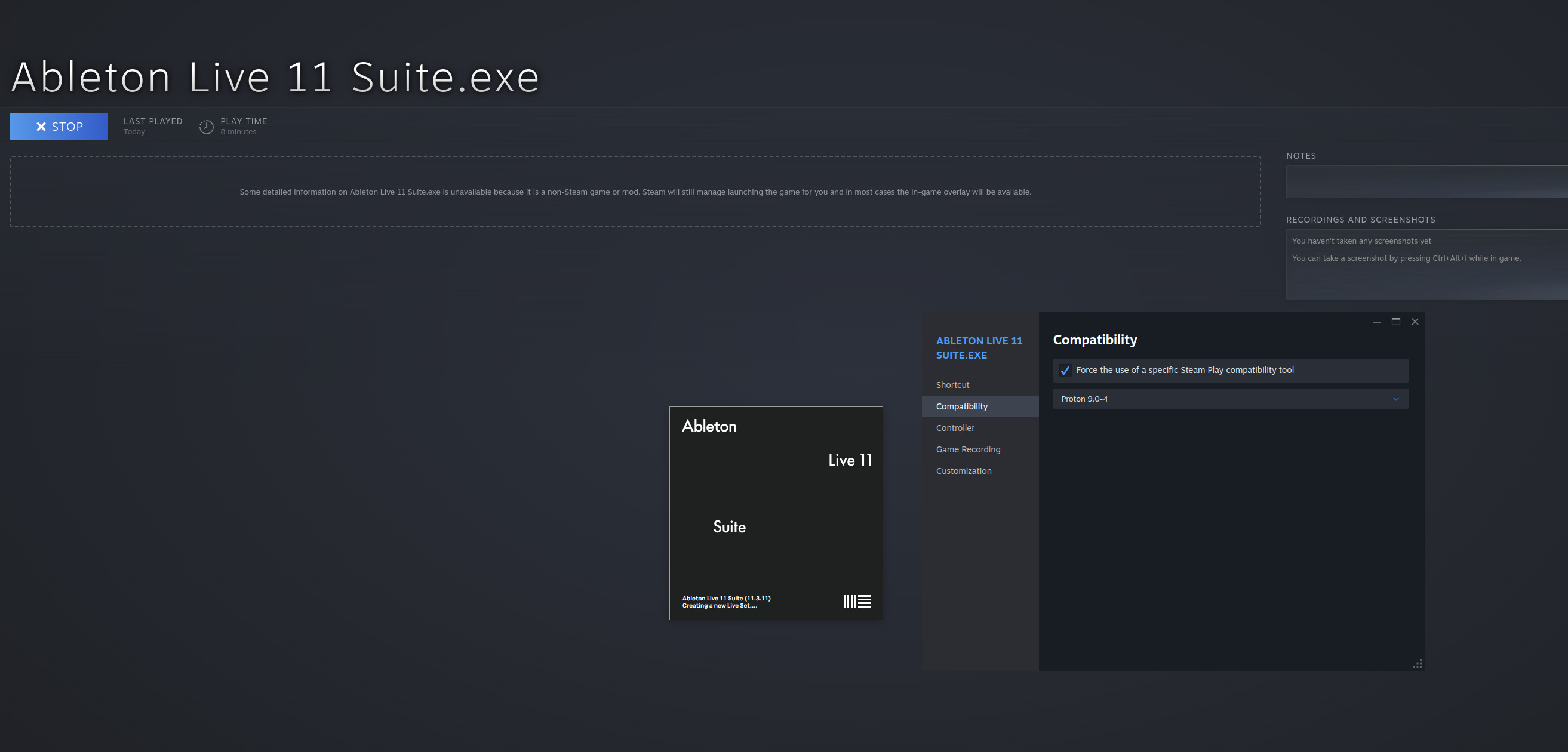
I apply this technique to the Ableton executable, and voila! I can run it using the Proton compatibility layer.
That said, getting low-latency audio drivers to work will be a different story—it’s still not as good as a Mac’s Core Audio, which astoundingly is low-latency out of the box. Linux has more annoying solutions for this, and so does Windows—and it’ll be a combination of getting both to work to get them within the compatibility layer.
Apple wins by a landslide in this regard because they were building Garage Band and Pro Tools, and wanted to make them great. (Now, if only it could work on custom hardware…)
The Proton development story is practically a page right out of Apple’s playbook. They have a specific use case in mind that they intend to make flawless through every part of the stack—including vertical integration via hardware.
What’s often ignored is how well this strategy ends up generalizing. Great support for Pro Tools means great support for Ableton. Great support for SteamOS means great support for Linux. A great whole is the sum of great parts.
Valve is experimenting with a sweet spot, blending what worked about the Apple strategy with filling the decentralized customization gaps previously patched by Windows. Look at it from a slightly different angle, and you find they’re actually doubling down—on the “great parts” method.
That’s a remarkable way to dig away at Microsoft’s moat—until suddenly, the moat’s drained entirely.